Integrating the Watercolor Sea Otter Clipart Bundle into Your Creative Workflow
In the modern landscape of digital design and physical crafting, the efficiency of your asset library directly correlates with the quality and speed of your output. For professionals, hobbyists, and small business owners alike, sourcing high-quality visual elements is often a bottleneck in the creative process. This is where curated collections, such as the Watercolor Sea Otter Clipart Bundle, serve not merely as decorative additions but as functional components of a streamlined design workflow. By incorporating pre-designed, high-resolution assets into your projects, you reduce the time spent on illustration while maintaining a cohesive aesthetic standard.
This article explores how to effectively integrate this specific clipart pack into various creative pipelines, from digital journaling to commercial product design. We will examine preparation strategies, compatibility considerations, and practical implementation tips to ensure these assets enhance rather than complicate your existing processes.
Understanding the Asset Structure and Quality
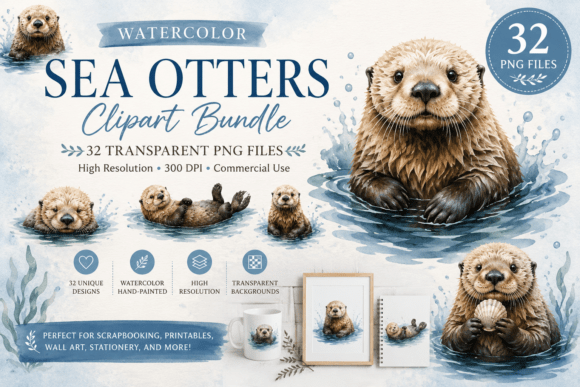
Before deploying any digital asset into a live project, it is crucial to understand its technical specifications. The Watercolor Sea Otter Clipart Bundle consists of 32 PNG images. The PNG format is critical for workflow efficiency because it supports transparency. Unlike JPEGs, which require manual background removal—a time-consuming and often imperfect process—PNGs allow for immediate layering over various backgrounds. This feature is indispensable for users working in software like Adobe Photoshop, Procreate, Canva, or Affinity Designer.
The "watercolor" style implies a soft, organic texture that mimics traditional media. When evaluating these assets for your workflow, consider the resolution. High-quality clipart should remain crisp when scaled for standard printing (such as greeting cards or journal pages) without pixelation. Understanding these technical baselines allows you to plan your project dimensions accurately from the outset, avoiding costly revisions later in the production cycle.
Pre-Production: Organization and Preparation
Efficient use of digital assets begins with organization. A common pitfall for creators is downloading bundles and leaving them in a generic "Downloads" folder, leading to wasted time searching for specific files during active projects. To maximize the utility of the Watercolor Sea Otter Clipart Bundle, implement a structured digital asset management system.
- Categorize by Theme: If the bundle includes variations (e.g., otters holding items, sleeping, swimming), sort them into sub-folders. This reduces cognitive load when selecting the right image for a specific narrative context.
- Create Templates: For frequent users, such as journalers or greeting card designers, create base templates in your preferred software. Place placeholder layers where clipart typically goes. This allows you to drag and drop otter images directly into predefined spots, ensuring consistent layout and spacing.
- Check Color Profiles: If you are designing for print, ensure your workspace is set to CMYK or that you understand how your printer handles RGB-to-CMYK conversion. Watercolor hues can shift during this process; testing a single print before a large batch ensures color fidelity.
By preparing your environment before you begin designing, you transform the clipart from a static file into a dynamic tool that accelerates your creative execution.
Integration in Digital Journaling and Planning
Digital journaling has evolved from a niche hobby to a widespread productivity method. Users of apps like GoodNotes, Notability, or OneNote rely on visual cues to organize thoughts and maintain engagement. The Watercolor Sea Otter Clipart Bundle fits seamlessly into this workflow by providing thematic anchors for monthly spreads, habit trackers, or mood logs.
Consider the psychological impact of visual consistency. Using a cohesive set of illustrations helps define the tone of a journal. The gentle, playful nature of sea otters can soften rigid planning structures, making the act of planning feel less like a chore and more like a creative ritual. When integrating these images:
- Scale for Readability: Ensure the clipart does not obscure text. Use the otters as marginalia or header accents rather than central focal points if the page is text-heavy.
- Layering Techniques: Utilize the transparency of the PNGs to layer otters behind semi-transparent text boxes. This creates depth and professional polish without requiring advanced graphic design skills.
- Thematic Mapping: Assign specific otter poses to specific types of entries. For example, a sleeping otter might represent rest days in a habit tracker, while an active otter could mark workout days. This visual shorthand speeds up both creation and review processes.
Application in Commercial Product Design
For entrepreneurs and small business owners, particularly those in the print-on-demand or handmade goods sector, time is a direct cost. The ability to rapidly prototype and produce designs is a competitive advantage. The Watercolor Sea Otter Clipart Bundle offers a versatile foundation for products such as greeting cards, stickers, nursery decor, and apparel.
When using these assets for commercial purposes, focus on differentiation. Since clipart bundles are available to multiple users, your value add comes from how you combine and contextualize the images. Here are practical strategies for integration:
Composite Design: Do not rely on a single otter image. Combine multiple elements from the 32-image pack to create unique scenes. An otter holding a flower paired with another floating nearby creates a narrative scene that is distinct from the raw asset. This approach mitigates the risk of generic-looking products.
Typography Pairing: The soft edges of watercolor art pair well with handwritten or serif fonts. Avoid harsh, industrial typefaces that clash with the organic feel of the illustrations. Test various font pairings to find a balance that enhances readability while maintaining the artistic integrity of the clipart.
Mockup Validation: Before finalizing a product, place your design on realistic mockups. This step is essential for quality control. It allows you to see how the watercolor textures interact with different material simulations, such as matte paper, glossy stickers, or fabric. Adjust opacity or contrast if the details get lost in translation.
Enhancing Greeting Cards and Paper Crafts
Physical crafting requires a different consideration set than digital design, primarily regarding print resolution and cutting precision. When using the Watercolor Sea Otter Clipart Bundle for greeting cards or scrapbooking, the transition from screen to paper is the critical phase.
Print at the highest possible quality settings. Watercolor textures rely on subtle gradients and paper-like textures within the digital file itself. Low-quality prints can result in banding or loss of detail. If you are using home printers, invest in high-grade cardstock that complements the watercolor aesthetic. Textured paper can enhance the illusion of traditional painting, adding tactile value to your craft.
For those using cutting machines like Cricut or Silhouette, note that PNGs do not have vector paths. You will need to use the "Print then Cut" feature or manually trace the images in your cutting software. To streamline this, select images from the bundle with clear, distinct outlines. Complex, fuzzy watercolor edges can be challenging for auto-trace functions, so manual adjustment may be necessary to ensure clean cuts.
Long-Term Usability and Asset Maintenance
A key aspect of professional workflow is the longevity of your resources. The Watercolor Sea Otter Clipart Bundle is not a one-time use item but a recurring resource. To maximize its return on investment, revisit the files periodically. As design trends shift, you may find new ways to utilize older assets. For instance, a minimalist trend might encourage you to use only small fragments of the otter illustrations as subtle icons rather than full-character displays.
Keep a record of which combinations yield the best results. If a particular layout featuring an otter and a specific color palette receives positive feedback on social media or sells well, document that formula. This creates a personal style guide that accelerates future projects. Over time, this bundle becomes part of your brand’s visual language, providing consistency across diverse outputs.
Conclusion
The Watercolor Sea Otter Clipart Bundle represents more than a collection of images; it is a tool for enhancing creative efficiency and aesthetic consistency. By understanding the technical specifications, organizing your digital library, and integrating these assets thoughtfully into your workflows, you can elevate the quality of your journals, cards, and commercial products. Whether you are a seasoned designer optimizing your production pipeline or a beginner looking to add professional touches to your hobbies, the key lies in intentional application. Treat these digital assets as foundational building blocks, combining them with your unique vision to craft outcomes that are both efficient and uniquely yours.